
Parameter
A characteristic that helps define or classify a system.

Yomomo · CC BY-SA 4.0
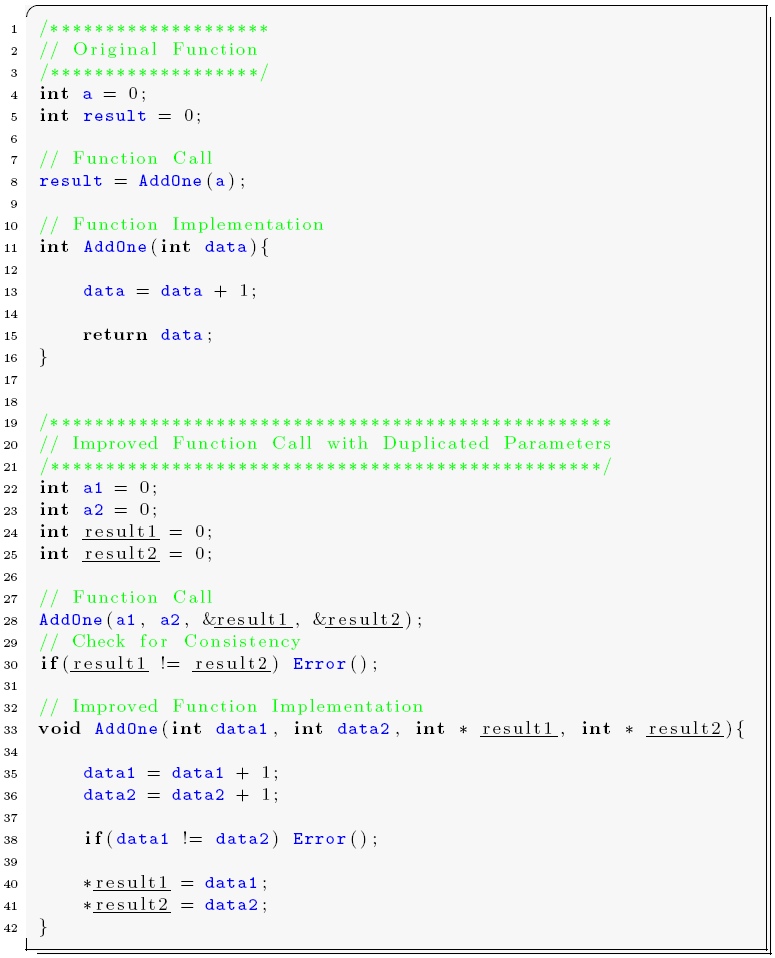
A parameter is a characteristic that helps define or classify a system, such as an event, project, object, or situation. It is an element useful for identifying a system or evaluating its performance, status, or condition. The term has specific meanings in disciplines including mathematics, computer programming, engineering, statistics, logic, linguistics, and electronic musical composition, as well as extended uses in non-scientific contexts to mean defining characteristics or boundaries.
- field
- Mathematics, computer programming, engineering, statistics, logic, linguistics, electronic musical composition
- known_for
- Defining and classifying systems; distinguishing between variables and parameters in functions and models
Lore & Background
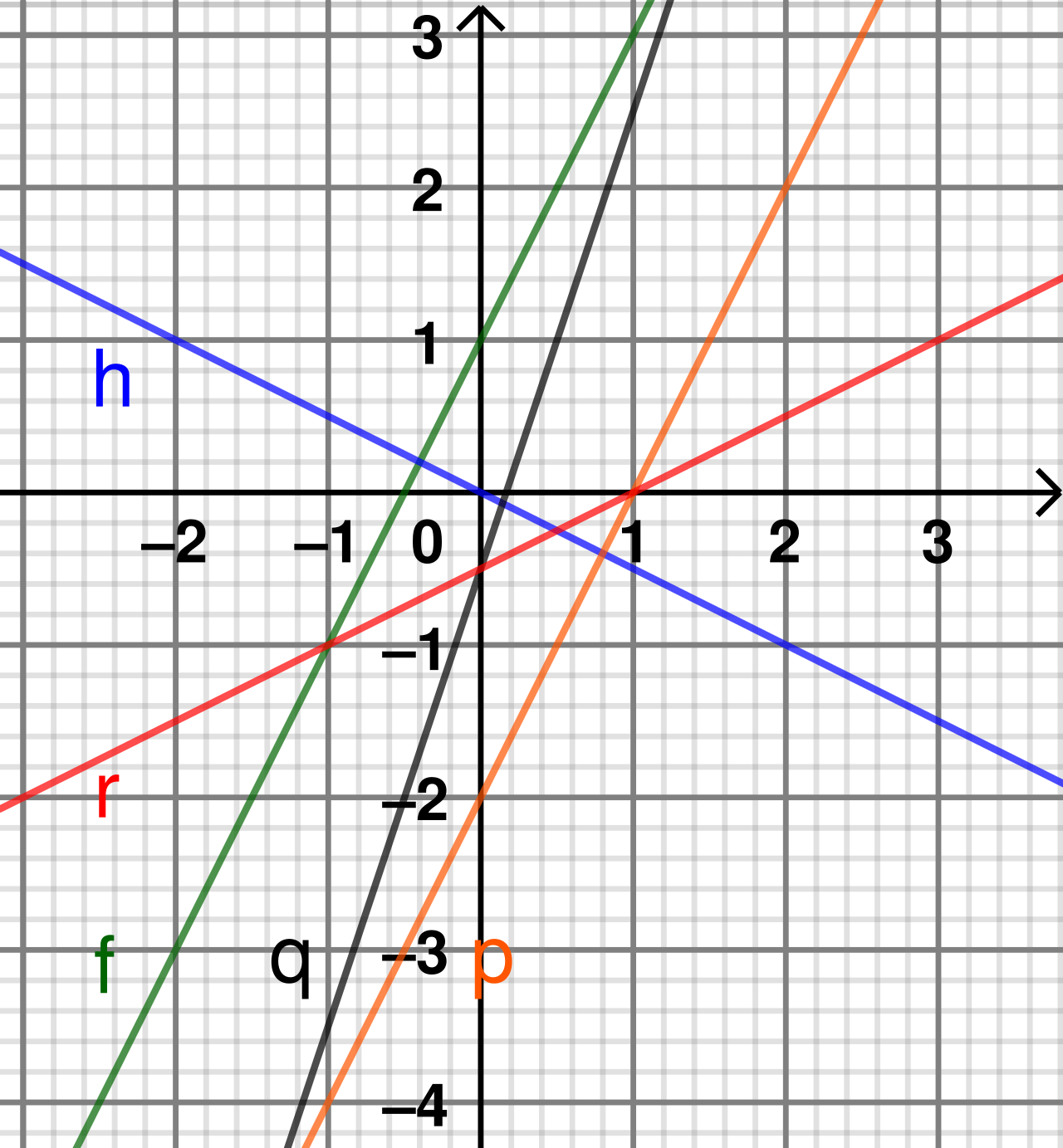
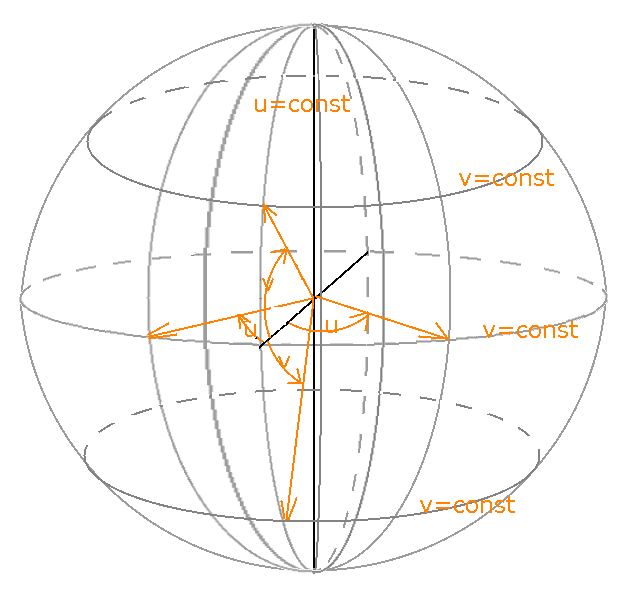
In mathematical modeling, when a system is described by equations, the values that describe the system are called parameters. For example, in mechanics, masses, dimensions, shapes, densities, and viscosities appear as parameters in equations modeling movements. Choosing a convenient set of parameters is called parametrization. For instance, the position of an object on a sphere can be parametrized using angular coordinates or directional distance from a known point. In mathematical functions, parameters are not listed among the arguments a function takes. A function definition with parameters defines a family of functions, one for each valid set of parameter values. For example, the general quadratic function f(x) = ax² + bx + c has variable x as argument, while a, b, and c are parameters (also called coefficients). Changing the status of symbols between parameter and variable changes the function as a mathematical object. In non-scientific contexts, the word parameter is used to mean defining characteristics or boundaries, as in the phrases 'test parameters' or 'game play parameters'. A parametric equaliser allows setting the frequency of maximum cut or boost and the size of the cut or boost, which are two parameters of a frequency response curve.
Reader's Guide
The concept of a parameter is fundamental across many fields, serving as a bridge between general models and specific instances. In mathematics, parameters allow a single function definition to represent an entire family of functions, enabling the study of how changes in these constants affect behavior. This is crucial in fields like probability theory, where parametric families of distributions are used. In engineering and physics, parameters represent inherent properties of materials or systems, such as mass or viscosity, that remain constant within a given problem but vary across different problems. The distinction between variables and parameters is context-dependent: what is a parameter in one situation may be a variable in another. For example, in the relationship y = ax², a is a parameter that is less variable than x or y but not an explicit constant like the exponent 2. Changing a parameter gives a different problem, while variations of variables are part of the problem itself. This flexibility makes parameters essential for modeling real-world systems, from mechanical movements to audio equalization, and for clarifying communication in technical and non-technical contexts alike.
Did You Know?
- The word parameter comes from Ancient Greek παρά (pará) 'beside, subsidiary' and μέτρον (métron) 'measure'.
- In a quadratic function f(x) = ax² + bx + c, a, b, and c are parameters (also called coefficients), while x is the variable argument.
- A parametric equaliser allows setting the frequency of maximum cut or boost and the size of the cut or boost as two parameters of a frequency response curve.
- In non-scientific contexts, parameter is used to mean defining characteristics or boundaries, as in 'test parameters' or 'game play parameters'.
A Different Lens on Uncertainty
Bayesian statistics rests on a fundamentally different philosophical foundation than the dominant frequentist tradition. Where frequentists treat probability as the long-run relative frequency of an event observed across repeated trials, Bayesians interpret probability as a quantified degree of belief in whether something will occur. This belief is not arbitrary; it can be anchored in prior knowledge such as the outcomes of earlier experiments, or in a practitioner's informed personal judgment about the event at hand. In practice, this means that before any new data arrives, the analyst encodes what is already known into a prior distribution. That prior serves as the starting point for every subsequent calculation. Because the entire framework treats uncertainty as a spectrum of confidence rather than a frequency count, Bayesian methods can directly attach a full probability distribution to unknown parameters of a model, expressing how strongly one believes each possible value is correct. This makes the approach especially natural in situations where data are scarce or where expert judgment carries genuine weight.
The Engine of Belief Updating
At the heart of every Bayesian calculation lies Bayes' theorem, a compact formula that transforms prior beliefs into refined conclusions once new evidence arrives. The theorem takes three ingredients and produces a fourth. First, the prior probability captures how confident one is in a proposition before seeing any data—say, the belief that a particular coin is fair. Second, the likelihood measures how probable the observed evidence would be if that proposition were true, such as the chance of a specific sequence of flips given a fifty-fifty coin. Third, the probability of the evidence overall acts as a normalizing constant. The output, the posterior probability, represents the updated degree of belief in the proposition after the evidence has been weighed. In statistical modeling, this machinery lets a practitioner estimate the parameters of a distribution or model by treating them as random quantities and assigning them a full probability distribution. Each new batch of data simply triggers another round of updating, making the process inherently sequential and adaptive.
Two Pioneers and a Delayed Name
The intellectual roots of Bayesian statistics stretch back to the mid-eighteenth century. In 1763, Thomas Bayes published a paper that worked out a particular instance of what we now call Bayes' theorem, laying the groundwork for treating probability as a measure of belief rather than mere frequency. Decades later, Pierre-Simon Laplace took up the thread across several papers spanning the late 1700s into the early 1800s. Laplace not only elaborated the Bayesian interpretation of probability but also applied these methods to solve a wide range of concrete statistical problems, demonstrating their practical power. Yet despite this early heritage, the label "Bayesian" was not commonly applied to the body of methods until the 1950s. In the intervening centuries, numerous other authors contributed techniques that fit squarely within the Bayesian framework, even though they would not have used that terminology. The field thus grew organically, with its name lagging well behind its mathematical substance.
From Marginalized to Mainstream
Throughout much of the twentieth century, Bayesian methods occupied a somewhat uncomfortable position within the statistical community. Many working statisticians regarded them with skepticism, citing both philosophical disagreements with the belief-based interpretation of probability and practical obstacles. The computational demands of Bayesian analysis were formidable; without efficient algorithms, carrying out the necessary integrations and updates was often prohibitively slow. As a result, the dominant approaches in textbooks and research were firmly rooted in the frequentist tradition. The turning point came with the arrival of powerful computers and, crucially, the development of new sampling algorithms such as Markov chain Monte Carlo. These tools made it feasible to approximate complex posterior distributions that had previously been out of reach. By the twenty-first century, Bayesian methods had shed their marginal status and were gaining steadily increasing prominence across statistics and its applied fields, no longer confined to a small circle of enthusiasts.
Gallery
Frequently Asked Questions
Who is Parameter in probability & statistics?
A parameter is a fixed numerical characteristic that defines a statistical population or model, such as the mean or standard deviation of a distribution. Unlike a random variable that shifts from one observation to the next, a parameter stays constant for a given system.
What is Parameter's role or 'power' in a model?
Its core function is to classify and define a system by specifying the underlying structure of a probability distribution. It also serves as the key distinction between the true, unchanging properties of a population and the fluctuating values we actually measure in data.
How does Parameter's 'story' resolve in practice?
Since true population parameters are almost always unknown, their narrative arc ends when statisticians estimate them from a sample of observed data. That estimation step—plugging in a statistic like the sample mean—is where theory meets real-world evidence.
Why is Parameter considered so important in the field?
Parameters let us compress an entire population's behavior into just a handful of numbers, making complex distributions comparable and tractable. Without them, building, selecting, or evaluating probabilistic models across different systems would be essentially impossible.
What's the difference between Parameter and a random Variable?
A parameter is a single, fixed constant that describes the population as a whole, whereas a variable assumes many different values across individual observations. Keeping these two concepts separate is fundamental to correctly setting up inference and hypothesis tests.
More in Probability & Statistics 25-29
Elsewhere in the Probability & Statistics universe
Spotted an error? Know more?
This is a living reference — every entry is fact-audited, and reader corrections feed straight into our audit queue. Suggest an edit · See this site's audit record